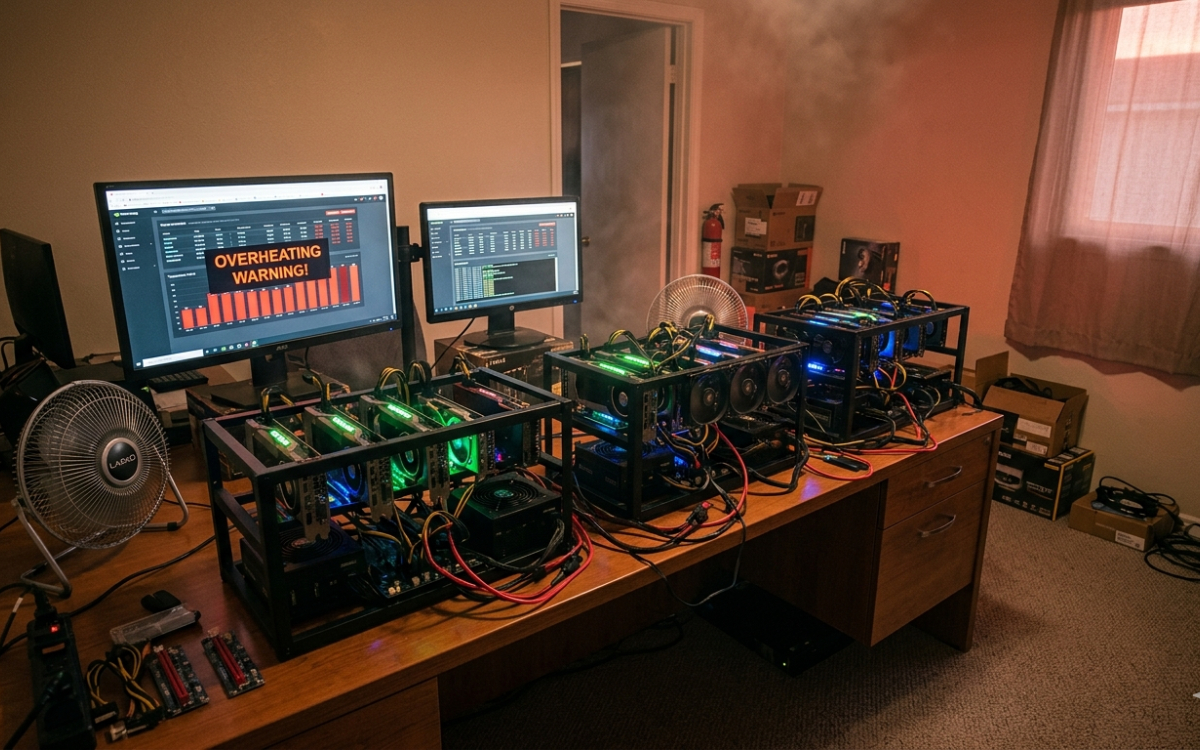
Running a crypto mining setup at home feels like taking control of your own earning machine. You install the hardware, configure the software, and watch the hashes roll in. Yet behind this independence sits a layer of risk that often goes unnoticed. Home environments are rarely designed with security in mind, and mining introduces constant network activity, exposed services, and valuable digital assets that attract attention.
Many home miners focus on profitability, hardware efficiency, and electricity costs. Security tends to be treated as an afterthought. That gap creates opportunities for attackers who understand how mining rigs behave and where weaknesses typically exist. Even a small misconfiguration can expose your wallet, your network, or your personal data.
Quick Security Snapshot
- Home mining setups expose networks and devices to constant external traffic
- Weak passwords and outdated firmware create easy entry points
- Wallet compromise often happens through indirect vulnerabilities
- Simple habits can drastically reduce risk without adding complexity
Why Home Mining Environments Are Easy Targets
Mining rigs are designed to stay online. They communicate continuously with mining pools, update workloads, and exchange data. This constant connectivity increases visibility. Attackers scan for predictable patterns, open ports, and misconfigured services. A home network does not usually have enterprise-level monitoring, which makes detection difficult.
Many miners rely on consumer routers with default settings. Some never change administrative credentials. Others disable security features to improve performance. These decisions seem harmless at first, yet they create a weak perimeter that can be bypassed with minimal effort. Even basic cybersecurity tips highlight how small configuration changes can significantly reduce exposure.
Another factor is device diversity. A mining setup often includes GPUs, ASICs, laptops, and sometimes repurposed hardware. If you have experimented with setups like turning older machines into miners, as discussed in guides such as old laptop mining setups, you are likely running devices that lack modern security protections.
Network Exposure and Hidden Entry Points
Your home network becomes the backbone of your mining operation. Every device connected to it shares the same infrastructure. If one device is compromised, others may be affected. This is especially risky when mining rigs are not isolated from personal devices such as phones or work laptops.
Mining software often requires specific ports to remain open. These ports can be discovered through automated scans. Once identified, attackers attempt brute-force login attempts or exploit known vulnerabilities. Poor security browsing habits can also introduce malware that silently monitors traffic or captures credentials.
To understand how mining devices differ and why some are more exposed than others, it helps to review the variations explained in mining hardware types. Each device category has unique risks tied to firmware, remote management tools, and update cycles.
Public documentation from trusted sources, such as the home network security guidance by national cybersecurity authorities, shows how even basic segmentation can prevent widespread compromise. This is especially relevant for miners who run multiple rigs on a single network.
Common Security Risks You Might Be Overlooking
Home miners often assume that attacks target large operations. In reality, smaller setups are easier to exploit. They lack monitoring, logging, and response mechanisms. Here are several risks that frequently go unnoticed:
- Weak router credentials, default usernames, and passwords allow unauthorized access to network settings
- Outdated firmware, mining rigs, and routers often run old versions that contain known vulnerabilities
- Unencrypted connections: Some mining software communicates without strong encryption, exposing data
- Shared networks, personal, and mining devices coexist without segmentation, increasing the attack surface
- Remote management tools and poorly secured dashboards can be accessed from outside the network
Each of these issues alone may seem minor. Combined, they form a layered vulnerability that attackers can exploit step by step. Once inside, they may redirect mining rewards, install hidden miners, or access sensitive files.
Device-Level Weaknesses in Mining Rigs
Mining hardware is optimized for performance, not security. Many ASICs and GPUs run lightweight operating systems with limited protections. Default credentials are common. Some devices do not support automatic updates. Others require manual patching, which is often ignored.
Attackers target these weaknesses by scanning for known device signatures. Once identified, they attempt to log in using default credentials or exploit firmware bugs. If successful, they can modify mining configurations, redirect payouts, or use the device for malicious activities.
The table below highlights how different components introduce different types of risk:
| Component | Primary Risk | Impact |
|---|---|---|
| Router | Weak credentials | Full network access |
| ASIC Miner | Outdated firmware | Hijacked mining rewards |
| GPU Rig | Open ports | Remote control takeover |
| Old Laptop | Unpatched OS | Malware infection |
Wallet Security Is Often the Weakest Link
Your mining rewards ultimately flow into a wallet. This makes it a high-value target. Even if your mining setup is secure, a compromised wallet can result in immediate loss. Many users store private keys on devices connected to the same network as their rigs.
Phishing attacks are particularly effective. Attackers create fake dashboards, fake updates, or fake pool notifications. If you log in or download malicious files, your wallet credentials may be exposed. Once access is gained, transactions cannot be reversed.
Separating wallets from mining devices is a simple yet powerful measure. Hardware wallets or offline storage significantly reduce exposure. Avoid storing keys on machines used for browsing, downloading, or experimenting with new software.
Practical Steps to Strengthen Your Setup
Improving security does not require advanced expertise. Small, consistent changes can create a strong defense. Focus on areas that provide the highest impact with minimal effort:
- Change all default passwords on routers and mining devices
- Enable network segmentation, separate mining rigs from personal devices
- Update firmware regularly, check for patches from manufacturers
- Use strong encryption for connections and disable unnecessary services
- Monitor network activity for unusual traffic patterns
After implementing these steps, review your setup periodically. Security is not a one-time task. It evolves as threats change and as your mining operation grows.
Balancing Performance and Protection
Many miners worry that security measures will reduce performance. In most cases, this concern is overstated. Proper configuration does not interfere with hashing efficiency. Instead, it ensures that your rewards are not diverted or stolen.
For example, isolating your mining network does not affect processing power. Updating firmware may even improve stability. Strong passwords and encrypted connections have a negligible impact on performance. The trade-off is minimal compared to the potential loss from an attack.
Think of security as part of your operational cost. Just like electricity or hardware maintenance, it protects your long-term returns.
Staying Ahead Without Overcomplicating Things
Home crypto mining offers flexibility and independence. That freedom comes with responsibility. A secure setup does not require complex tools or expensive solutions. It requires awareness, discipline, and attention to detail.
By understanding how attackers think and where they look for weaknesses, you can stay one step ahead. Focus on securing your network, hardening your devices, and protecting your wallet. These areas form the core of your defense.
With the right approach, your mining setup can remain both productive and secure. You keep control over your operation, and more importantly, over your earnings.





No responses yet