
For many beginners and small-scale crypto enthusiasts, the question of is solo mining a lottery ticket or a waste of money comes up quickly. Solo mining seems appealing because the miner could claim a full block reward alone. But is it really worth the time, money, and effort? This guide breaks down the realities, helping you understand when solo mining makes sense and when it’s likely a losing game. By the end, you’ll have a clear picture of the risks, requirements, and strategies involved.
Before diving into the technical details, let’s summarize the key points so you can quickly see what matters most for solo miners.
Understanding Why Solo Mining Feels Like a Lottery
Solo mining can seem like a lottery because success depends heavily on luck and computational power. Some miners win big, but many never mine a block despite months of effort. Here’s what to know before considering solo mining:
- Solo mining offers full block rewards but comes with high risk.
- Success depends on hash rate, network difficulty, and hardware quality.
- Pooled mining reduces risk but shares rewards among participants.
- Electricity costs and maintenance can eat into potential profits.
These points provide a snapshot, but a deeper look into solo mining helps clarify why it feels like a gamble.
What Solo Mining Really Means
Solo mining involves attempting to solve a cryptographic puzzle independently, without joining a mining pool. This means you rely entirely on your own computing power to validate blocks and earn rewards. Understanding how this works is key to deciding whether solo mining is worth the investment.
How Solo Mining Works
Solo mining requires hardware to generate hashes that compete with all other miners in the network. Each hash is an attempt to solve a block, and the first miner to solve it claims the reward. Success depends on your hash rate relative to the total network. Beginners often find crypto mining guide helpful for understanding software setup, mining algorithms, and block validation. Using such resources can make solo mining less confusing and help set realistic expectations.
Hardware and Resource Requirements
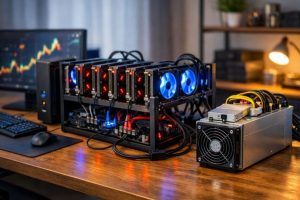
The type of mining hardware you choose directly affects your chances of earning rewards. High-performance ASICs or GPUs are common for solo mining. Electricity costs, cooling systems, and hardware maintenance are also significant factors. Selecting the right mining hardware types ensures your setup is efficient and reduces unnecessary expenses. Without proper equipment, solo mining becomes even less likely to yield rewards.
Evaluating Solo Mining: Lottery or Waste?
Understanding the odds and costs helps answer is solo mining a lottery ticket or a waste of money. Solo mining can produce a full block reward, but the chances are slim unless you operate at scale. Most small miners see long stretches without any payouts.
Probability of Success
The probability of mining a block solo is mostly determined by your hash rate compared to the network. For example, a miner with 1% of total network power has roughly a 1% chance of earning a block reward in a given period. Comparing mining pools vs solo mining helps illustrate why pooling resources increases consistent payouts while reducing variance. Solo mining can feel exciting, but the odds often resemble buying a lottery ticket.
Costs vs Potential Rewards
Electricity, hardware depreciation, and cooling add up quickly. For many small miners, the cost of running equipment outweighs sporadic rewards. Even when a block is successfully mined, the payoff might barely cover operational costs if electricity is expensive. Careful calculations are crucial before investing in a solo mining setup.
Risk Factors and Limitations
Solo mining exposes miners to multiple risks: hardware failure, network difficulty changes, volatile cryptocurrency prices, and potential downtime. Unlike pooled mining, you cannot rely on steady payouts to offset costs. Beginners should understand these limitations to avoid unnecessary financial losses.
Who Should Consider Solo Mining
Solo mining is not inherently pointless, but it suits a specific type of miner. Large-scale operations with cheap electricity and high hash rates have the best chances of success. Hobbyists experimenting with smaller coins may also find solo mining educational, even if the financial rewards are uncertain.
Experienced Miners vs Beginners
Beginners often struggle with solo mining because they lack sufficient hash power. Learning through small-scale experiments can be valuable, but it is unlikely to be profitable. Experienced miners who optimize their hardware, monitor electricity costs, and track network changes can occasionally benefit from solo mining.
Alternative Strategies
Hybrid approaches allow miners to enjoy the learning experience while mitigating risk. For example, mining smaller cryptocurrencies solo or using a combination of pooled and solo mining can balance excitement with consistent rewards. Understanding the risks and rewards helps miners decide which strategy fits their goals.
Practical Tips for Minimizing Risks in Solo Mining
Solo mining is risky, but there are ways to improve your experience and make informed decisions. Understanding best practices helps beginners avoid common mistakes and maximize learning opportunities.
Start Small and Track Performance
Before investing heavily in hardware, try solo mining with a single GPU or small setup. Monitor electricity usage, hash rates, and potential block rewards. Keeping track of these metrics helps you understand the realistic outcomes of solo mining without large financial risk.
Optimize Your Hardware and Setup
Ensure your mining rig runs efficiently. Proper cooling, updated drivers, and stable internet connections reduce downtime and improve hash performance. Choosing the right mining hardware types is key to balancing performance and electricity costs.
Set Realistic Expectations
Solo mining is not a guaranteed way to earn cryptocurrency consistently. Approach it as an educational experience. Understanding proof-of-work mining mechanisms and network difficulty gives you insight into why blocks are mined sporadically and why luck plays a big role.
Consider Smaller or Emerging Coins
Mining major cryptocurrencies like Bitcoin alone can be extremely challenging. For beginners, exploring smaller coins with lower network difficulty increases the likelihood of success. This provides practical experience without excessive cost or risk.
Is Solo Mining Really Worth the Effort?
By now, it should be clear why the question is solo mining a lottery ticket or a waste of money matters. Solo mining can be thrilling, educational, and occasionally profitable, but for most beginners, it is unlikely to deliver consistent income. Consider your hardware, electricity costs, and patience before diving in.
Solo mining can also help you gain practical experience with cryptocurrency networks, setting you up for more advanced strategies later. Understanding proof-of-work mining is essential for anyone attempting solo mining, as it explains why success depends on luck, computational power, and timing.
Deciding Whether Solo Mining Is Worth It
Solo mining is often a high-risk activity that feels like playing a lottery. For beginners, pooled mining generally offers more predictable results, while solo mining remains a niche pursuit. Carefully weigh your resources, goals, and tolerance for uncertainty before committing. Experimentation can be educational, but understanding the financial and technical challenges is crucial.
With the right knowledge and preparation, solo mining can be a rewarding learning experience, even if the financial payoff is rare. Recognizing the limitations, planning hardware investments, and managing expectations will help you decide if this path aligns with your crypto goals.



No responses yet