Cryptocurrency mining has changed shape. In 2026, it no longer belongs only to industrial warehouses filled with machines. Smart participation now matters more than raw scale. Efficiency, strategy, and system awareness make the difference.
Mining today sits at the intersection of software, hardware, and economics. Some people treat it as a serious business. Others use it to learn how blockchains operate. Many see it as a way to support decentralization while earning modest returns.
This guide covers the full mining landscape. You will learn how mining secures networks, what equipment makes sense, how costs affect returns, and where newer models like DePIN fit in. Each section links to deeper resources so you can focus on what matters most for your situation.
Part I: The Mechanics: How It All Works
At its core, mining is not about guessing numbers. Miners act as independent auditors. They verify transactions, group them into blocks, and secure the network by following strict consensus rules.
Every valid block strengthens the chain. In return, the network issues block rewards and transaction fees. This process replaces central control with open competition and verification.
To understand the technical process of validating blocks and earning rewards, read our guide on how crypto mining actually works.
The Consensus Divide
Not all cryptocurrencies rely on mining. Bitcoin uses Proof of Work, where energy and computation secure the network. Ethereum and many newer chains rely on Proof of Stake, where capital replaces computation.
This distinction shapes everything. Hardware needs change. Costs shift. Risk profiles differ.
Before choosing a coin to mine, it is crucial to understand the differences between Proof of Work vs Stake.
Mining only applies to certain networks. Knowing which ones matter saves time and money.
Part II: Hardware: Choosing Your Equipment
Mining hardware determines efficiency, noise levels, and long-term viability. Many newcomers feel overwhelmed by specs, acronyms, and performance claims. Clear categories simplify decisions.
CPUs, GPUs, and ASICs
CPUs still play a role. Some privacy-focused coins resist specialized hardware, making CPUs useful for experimentation and learning.
GPUs offer flexibility. They support many algorithms and allow miners to switch coins as conditions change. They also retain resale value.
ASICs dominate Bitcoin mining. These machines perform one task extremely well. They offer high efficiency with little flexibility.
Confused about the equipment specs? We break down the different types of mining hardware available.
The Reality of Home Mining
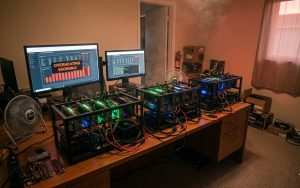
Mining produces heat and noise. Many industrial ASICs exceed 70 decibels. That level disrupts shared living spaces and offices.
Newer designs focus on residential use. Improved cooling, lower power draw, and quieter fans make home setups practical again.
If you live in an apartment or share an office, you should check out our reviews of the best silent home miners.
Choosing the right machine means balancing performance with everyday comfort.
Part III: The Economics: Costs and Returns
Mining rewards do not arrive for free. Profit depends on more than hashrate. Electricity costs, network difficulty, and market prices interact constantly.
Understanding Real ROI
Hardware prices attract attention, yet power costs decide outcomes. A miner earning coins at a loss drains value quickly. Electricity rates measured in cost per kilowatt-hour often matter more than headline numbers.
Before investing in expensive rigs, look at the data to see is Bitcoin mining profitable for home users today.
Many setups fail because this calculation gets skipped.
Mining as a Practical Utility
Mining converts electricity into computation, and that computation releases heat. Unlike space heaters, miners generate warmth while producing network value.
Using miners for heating offsets energy costs. This approach improves viability in colder regions and higher-rate markets.
You can offset electricity costs significantly by using a creative method of heating with crypto miners.
Smart use cases change the economics.
Part IV: Strategy: How to Mine Effectively
Mining strategy determines payout stability. The main choice centers on cooperation versus independence.
Pool Mining or Solo Mining
Pools combine hashrate from many miners. Rewards arrive more frequently but in smaller amounts. Variance stays low. Cash flow remains predictable.
Solo mining offers full block rewards but extreme variance. Many miners never find a block. A few receive large payouts.
Most beginners need to decide the best strategy between mining pools vs solo mining.
Consistency often matters more than chance.
Understanding the Lottery Effect
Low-power devices promise excitement. USB miners attract hobbyists because of cost and simplicity. The odds remain extremely low.
These devices teach protocol basics but rarely deliver returns.
Thinking about buying a USB stick miner? We analyze the real solo mining lottery odds so expectations remain realistic.
Part V: Alternative Methods: Mining Without ASICs
Not everyone wants to buy hardware. Some want to learn first. Others want zero upfront cost.
Learning With Existing Hardware
Old laptops and spare systems provide accessible entry points. They allow hands-on experience with wallets, nodes, and mining software.
If you don’t have a budget for new gear, you can get started by mining on old laptops and learning the workflow without financial risk.
Education often delivers the highest long-term value.
Mining Beyond Hashing
Mining now extends beyond computation. DePIN projects reward users for providing bandwidth, coverage, or storage. These models lower entry barriers.
Move beyond hardware and explore the emerging trend of DePIN WiFi mining projects that pay for participation rather than raw power.
This shift reflects how mining continues to adapt.
Getting Started With Cryptocurrency Mining
Cryptocurrency mining serves different goals. Some pursue income. Some support network security. Others use it to understand decentralized systems from the inside.
Each approach requires clarity, patience, and realistic expectations. Hardware choices matter. Energy costs matter. Strategy matters.
The best time to start learning about blockchain infrastructure was ten years ago. The second best time is today.