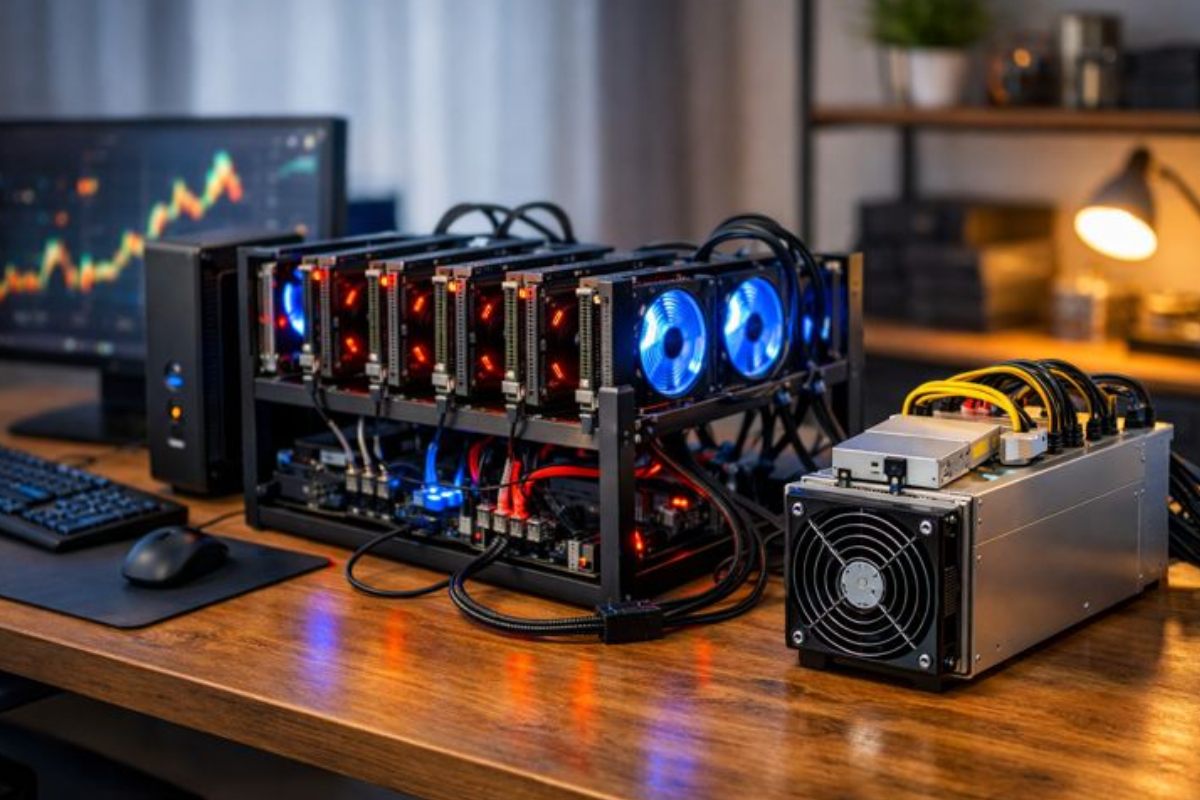
The different types of mining hardware play a central role in cryptocurrency mining, directly affecting efficiency, energy consumption, and potential rewards. Selecting the right hardware is crucial for beginners and experienced miners alike. From CPUs to advanced ASICs, each device has its own purpose and benefits. Understanding these differences helps you make informed decisions, optimize your setup, and avoid unnecessary costs.
Before diving into the specific hardware types, it’s helpful to get a snapshot of the main categories and what they offer.
Different Types of Mining Hardware You Should Know
Mining hardware comes in several forms, each designed for a particular mining task. Knowing the differences helps you choose the right setup for your goals, whether you want to mine Bitcoin, altcoins, or experiment with smaller cryptocurrencies.
Here’s a quick overview of the main types:
- CPU Mining: Uses your computer’s processor, suitable for beginners or small-scale experiments.
- GPU Mining: Employs graphics cards for versatile mining across multiple cryptocurrencies.
- ASIC Mining: Specialized devices optimized for high efficiency with specific coins.
- FPGA Mining: Programmable hardware offering customization with low energy use.
This overview sets the stage for the detailed discussion of the different types of mining hardware you need to know.
What Mining Hardware Is and Why It Matters
Mining hardware is the foundation of cryptocurrency mining. It determines how quickly transactions are processed, the amount of energy consumed, and the rewards miners can earn. Choosing the right device also influences setup costs, noise levels, and long-term sustainability. Understanding mining hardware ensures that you make choices that balance performance with practical constraints.
Key Components of Mining Hardware
Mining relies on powerful processors capable of repeated calculations. CPUs are suitable for basic mining but offer low hash rates. GPUs provide higher processing power and flexibility, allowing miners to work across multiple coins. ASICs focus on maximum efficiency for specific coins, while FPGAs allow programming adjustments with lower energy consumption. Understanding these components helps miners select hardware aligned with their goals.
How Hardware Impacts Mining Rewards
Mining rewards are tied to processing speed, energy use, and network difficulty. Faster hardware improves the chance of solving blocks, while inefficient machines may consume more electricity than they earn in rewards. Even older devices can provide opportunities for passive crypto mining, giving beginners a low-risk way to experiment and learn.
Types of Mining Hardware and Their Differences
Choosing the right mining hardware depends on your goals, budget, and the cryptocurrency you plan to mine. The following section breaks down the main types, how they work, and scenarios where each is most suitable.
CPU Mining – Beginner-Friendly Option
CPU mining uses your computer’s central processor. It is accessible, low-cost, and ideal for newcomers exploring cryptocurrency mining. However, CPU mining is generally inefficient for high-demand coins like Bitcoin. It works best for smaller altcoins or experimental mining, allowing users to understand blockchain processes before upgrading to more powerful hardware. Beginners often start with CPU mining to gain hands-on experience without a high investment.
GPU Mining – Versatile and Flexible
GPU mining uses graphics cards to increase processing power. It supports a variety of coins, giving miners flexibility across different cryptocurrencies. Modern GPUs balance speed and energy consumption but can produce noticeable noise. For home miners concerned about sound, there are silent home miners designed to operate efficiently without disturbing living spaces. GPUs also allow beginners to experiment with different algorithms, providing both educational and practical mining experience.
ASIC Mining – High-Power Specialist
ASICs are purpose-built mining devices optimized for specific cryptocurrencies. They provide high hash rates and energy efficiency, but are limited to certain coins. ASIC mining requires significant upfront investment and generates heat that must be managed properly. Planning for electricity costs and cooling is essential for long-term operation. Choosing the right ASIC model ensures maximum performance, making it the preferred option for miners focused on dedicated, high-volume mining.
FPGA Mining – Programmable and Efficient
FPGAs, or Field Programmable Gate Arrays, offer a balance between GPUs and ASICs. They allow miners to program devices for specific algorithms while maintaining energy efficiency. Operating FPGAs requires technical skill, which makes them suitable for enthusiasts who enjoy customizing their hardware to optimize performance. This type of mining hardware is ideal for niche coins or small-scale, flexible setups, providing experimentation opportunities and adaptability.
Selecting the Right Mining Hardware
Choosing mining hardware involves more than picking the most powerful device. Miners need to consider goals, budget, electricity costs, and preferred coins.
Mining Pools vs Solo Mining
Mining pools provide more consistent rewards, while solo mining relies entirely on your hardware. Your choice also depends on mining methods, since certain devices perform better in pools compared to solo setups. Pools may favor GPUs or ASICs depending on the coin’s algorithm, making this decision central to your strategy.
Considerations for Home and Small-Scale Miners
Noise, heat, and available space are critical factors for home mining. Smaller ASICs or GPUs work best in controlled environments. Proper ventilation and cooling prevent overheating and reduce energy use. Beginners often start with low-power setups and scale up as they gain experience.
For readers looking for a more comprehensive guide on mining fundamentals, you can check out our crypto mining guide.
Emerging Hardware Trends for 2026
Mining hardware continues to evolve, offering better efficiency and reduced energy consumption. Some new trends include liquid-cooled GPUs, modular ASICs, and energy-efficient FPGA models. Keeping up with these innovations helps miners plan upgrades wisely and future-proof their setups. Modern hardware design also reduces noise and heat, making home mining more feasible. Staying informed about emerging devices allows miners to optimize performance while controlling costs and environmental impact.
Choosing the Right Different Types Of Mining Hardware
Mining hardware choices impact performance, energy consumption, and long-term success. Beginners should focus on accessible options, while experienced miners may invest in specialized equipment. Always consider electricity, cooling, and space before committing to hardware. For readers interested in how each device interacts with the network, learning about the Bitcoin mining process provides valuable context. This knowledge explains why some hardware performs better than others and guides miners toward the most efficient setups.
Starting with the right type of mining hardware creates a strong foundation for consistent success and a deeper understanding of cryptocurrency mining.


No responses yet